youhi everyone my name is betsy cooper andi am the director of the aspen techpolicy hub i’m thrilled to be here todayto release really important productsfrom our hub fellows on tech4goodthere’s a huge debate around the risksand rewards of technology and I thinktoo often we forget that technologyprovides tremendous benefit in manydifferent sectors of our lives and soseveral of our fellows aunjanue versionand Samara trilling have been working onamazing projects over the past sixmonths to really highlight some of theways that technology could be used tohelp prevent violent extremism and toimprove the fairness of our housingsystem and so we’re very excited torelease those today in this webinar sothank you so much for joining us the runof show will basically serve as followsour fellows will each present their workand then we’re thrilled to have akeynote from radiantabeba who will sort of bring togetherthe broader themes of the talks thatwe’ve had today a couple logisticalnotes we will get to questions at theend of the program please use the Q&Abox in order to submit any questions tous and we will get to as many as we cantowards the end also we’ll be releasingthe products that we’re talking aboutduring this webinar so follow along inthe chat button and you’ll be able tosee the actual links to the projectsthat have been created and you can lookthrough them in real time and thenfinally as you probably just noticedwe’re a relatively new webinar team andthere will probably be a few technicalglitches upon along the way so pleasebear with us if those do occurso first I’m thrilled to hand it over toon Jenna virgin who is going to betalking to us about her work oncountering violent extremism this is areally interactive problem it’s one thatin fact inspired me to enter policy inthe first place on Jenna is the formerCTO of Callisto she’s now with Polarisand she’s developed an innovative systemto help witnessesreport concerning behavior so we’re veryexcited to release this and over to Annato tell us more about what she’s doneThank You Betsy and thanks to all of youfor spending your morning with usmy name is Anja Norma Jean and I’m thechief technology officer of Polariswe’re an NGO based in Washington DC thatfights human trafficking and modernslavery my expertise is applyingcryptography to national security andhuman rights issues and so my work atAspen is focused on a central questionwhich is how can we create privacypreserving ways to prevent mass gunviolence caused by white supremacistextremists today I’m going to share withyou the work that I’ve done over thepast year to address this problem firstI want to take you back to August oflast year to two extremely tragic eventsfirst was a shooting in El Paso Texasand then immediately the next day themass shooting and day in Ohio as I oftenfeel after horrific mass shootings I wasdevastated and frankly angry at thepoliticians who refused to takemeaningful action they offered thoughtsand prayers and said there was no way toprevent these random acts of violencebut these two mass shootings were notrandom because we know that the shooterin El Paso was motivated by whitesupremacist ideology and we know thatthe shooter in Dayton was motivated bymisogyny and so I became really investedin this problem and began reading a lotabout it and there were three seminalpieces of research that really inspiredme first I came across a reportpublished by the Sioux font Center aleading counterterrorism think-tank andthe report described how whitesupremacist extremism is a transnationalpolitical movement that poses a globalthreat interestingly the reportuncovered how these networks imitate thetactics and techniques of Salafijihadist terrorist groups like al Qaedaand Isis and most surprisingly whitesupremacist terrorism is responsible formore deaths on US soil than jihadistterrorism since 9/11 after I read thisreport it was clear to me that althoughwhite supremacist ideology is not uniqueto the United States theability caused by this problem isexacerbated in the US because of theubiquity and unfettered access tofirearms in our country and so after Ilearned that the perpetrators of themass shootings in El Paso and inPittsburgh and in Charleston and so manyothers were motivated by whitesupremacist ideology I became interestedin looking at mass shootings from acounterterrorism lens this led me to thesecond piece of important research thatI found a gun violence study conductedby the FBI that looked at the pre attackbehaviors of active shooters between2000 and 2013 the most interestinginsight from that study was at eachperpetrator had on average threedistinct witnesses who observedconcerning behaviors prior to the attacksome of these behaviors were quitesevere including the killer explicitlycommunicating an intention to cause massharm unfortunately nearly 60% of thosewitnesses did not report to the policeand their reason for not reportingincluded distrust of the police loyaltyto the perpetrator the self-doubt ofone’s assessment of the risk and adesire to remain anonymousthis meant that an opportunity forintervention was missed and live herlost the final piece of research thatinfluenced me was a report on every timefor gun safety which shows that themajority of mass shootings involvedomestic violence specifically 54percent of all mass shootings involvethe perpetrator killing a family memberor intimate partner in the attackresearch also shows that misogyny orextreme hatred of women is a commonfactor that underpins many terroristideologies and political violenceincluding white supremacist extremismtherefore one could argue that domesticviolence is a force multiplier forviolent extremism and should be treatedwith the federal resources it deservesand more importantly domestic violencesurvivors should be empowered to play apivotal role in preventing mask onviolence caused by white supremacistextremists the theory of change that Iam proposing is if we can address a slowreporting rate of witnesses especiallyamong vulnerable populations we couldintervene appropriatelyfor a mass shooting occurs and savelives I have solved a very similarproblem before but in a different spacebefore I came to Aspen I was a CTO of atech startup called Callisto and wefocus on the low reporting rates ofsexual assault survivors on collegecampuses and the reason survivors don’treport sounds very familiar to medistrust of the police loyalty to theperpetrator the self-doubt of one’sexperience and a desire to remainanonymous we saw this low reporting rateas a game theory problem namely thatthere’s a first mover disadvantage forcoming forward by yourself but if youcan learn you’re not the only one you’remore likely to take action so we createda product called a cryptographicinformation escrow a victim can create atime-stamped encrypted record of theresult and nobody not even Callistocould see that data unless a secondvictim named the same perpetrator ifthere was a match the two victims areconnected to a lawyer who will help themnavigate all of their reporting optionsranging from taking legal action topursuing restorative justice toeverything in between and the productworks closer users are six times morelikely to report they report three timesfaster and we were able to detect serialperpetrators that would have otherwisenot been reported to the police and so Iasked myself how could a similar privacypreserving technology be applied to thisnational security problem here’s how Ienvisioned it could workthe first witness creates an encryptedrecord about the suspect and enters intothe reporting escrow that report staysencrypted so that nobody not even theescrow provider can see this data unlessanother witness creates a record aboutthe same suspect the first witness canunlock the escrow independently if theobserved behaviors are severe enough theescrow is unlocked when a threshold ofconcerning behaviors are observed by oneor more peoplethis creates a low-risk environment forthe witness to report because nobody cansee this accusation unless a crediblethreshold of risk is met the records aredecrypted decryptedlegal counselor who is an attorneyprovides free confidential counseling tothe witness about the reporting optionsthe legal counselor provides twofirewalls first as a lawyer they canestablish attorney-client privilege andprotect these conversations against asubpoena and second they can filter outclause accusations by by maliciousactors before they become escalated tolaw enforcement the counselor can thenexplain the variety of calibratedreporting options a witness can takesuch as filing for a read file apetition to remove the suspects weaponsenrolling the suspect in a therapeuticprogram or another non-law enforcementintervention applying this technicalinnovation poses several policyquestions which became the crux of myproject at Aspen first we need toclearly define what the threshold ofrisk is this is a challenging problembecause you want to both identifypotential violence while not infringingon citizens civil libertiesI wrote a technical white paper thatoutlines the details of this risk modelthat would power the engine of thisescrow second when you’re buildingproducts for a vulnerable populationsuch as domestic violence survivors itis important to understand that theirneeds are unique in a moment of crisis Icreated a trauma-informed designframework to show how an escrow for thisparticular population should be deployedthird this model requires calibrationwith real data I created a series ofreal-life case studies to run throughthe risk model to see where the edgecases might require tweaking and finallyI built a demo app with this risk modelto show how the escrow could be poweredyou can test it out yourself at thewitness afterward this projectintersects with so many multidisciplinary areas counterterrorism guncontrol domestic violence privacy andcivil liberties behavioral health andcryptography and so a major focus of mytime at Aspen was learning from theseexperts in these fields here are some ofthe informational interviews withsubject matter experts I had during myfellowship that inform the details of mysolution I particularlywant to thank a few people first ColinClark from the Sioux font Center was myadvisor during this fellowship and he’sso generous he supported my work and Iwant to thank to Aspen fellows whojoined me on this project Samaratrilling and Jessica Kohl I’d like toleave you with some concluding thoughtsthe events of 2020 underscore the factthat mass gun violence caused by whitesupremacist terrorists continues to bean urgent crisis that requires amultidisciplinary approach in the lastsix months alone we have seen thefollowing trends we’ve seen whitesupremacist terrorist groups threaten touse the corona virus as a bio weaponwe’ve seen spikes in gun sales we’veseen that domestic violence hasincreased significantly and we’ve seenthat the public’s trust in lawenforcement has drastically declined aspolice brutality is systemic racismpersist there is an opportunity amidstthe chaos of this current moment toreimagine what public safety can looklike we can develop solutions thatprotects our communities from violentextremism and that protects civil rightsand civil liberties and that createcompassionate and calibratedde-escalation channels that go beyondthe traditional law enforcement responsemy hope is that this proposal can excitepolicy makers law enforcement andactivists alike we don’t need to choosebetween national security and civilliberties we can only must build forboth thank you back to you Betsythanks so much on Jenna that wastremendous and I think is highlighting areally important space which is theimportance of engaging with witnessesand giving them ways that they feelcomfortable to report in these reallysensitive situations I want to remindthe audience that we can take questionsat any time so use the Q&A box to askany questions for onjena and we’ll getto those later in the program also we’veofficially released her project and soyou can now visit it if you check outthe chat window you’ll be able to seethe information about her project soswitching gears we have a housing crisisin America and that housing crisis hasonly gotten worse in light of the Pandathat were all experiencing Judah Koba 19Samara trilling who’s a softwareengineer at sidewalk labs has reallyinnovative ideas for how to improve themortgage lending system and that was thefocus of her project while she was hereat the hub we’re very excited to releasethis work today so Samara over to you totake us through the amazing stuff thatyou’ve built great thank you so muchBetsy I’m a Samaritan and I’m a softwareengineer with a focus on engineering forsocial justice and fairness on Jennabrilliantly articulated how in 2020discrimination and white supremacy showup in so many insidious ways but that wecan craft technology to help detect andprotect people from white supremacistviolence I’m going to talk about howdiscrimination shows up in the financialsystems and technology we already haveand how we can turn those technologiesto our benefit and make them fight onour behalf for fairness and justice butfirst my journey to this projectresearching housing loans starts in apretty predictable place with a house somy family never owned our house when Iwas growing up and I’ve always wanted toown my own home like most people I neverthought much about mortgages and howthey work until I started gettingcurious about what it would be what itwould take to buy a home so I starteddoing research about mortgages and Ifound a really puzzling statistic itturns out that women are charged higherinterest rates for mortgages but we paythem back at higher rates than ourcounterparts to me this mismatch seemspretty unfair for banks it’s a greatdeal they can charge women higherinterest rates and will still pay backthe mortgage and this is not just truefor women people with same credithistory and people who live in areaswhere there aren’t as many financialservices options also get charged higherrates and peopleof color are disproportionatelyrepresented in both of those groups sowomen of color often get hit doubly hardby these policies and it turns out thereason why women are charged higherinterest rates is partially because ofanother unfair thing the gender pay gapwomen make lower incomes on average andlenders use your income as a data pointto help predict whether you’ll defaulton or not pay back your mortgage so onaverage women have lower incomes andtherefore on average we get higherinterest rates this brings me to thefirst problem that I wanted to solveincome may be an OK predictor ofmortgage default for men but it’s a badpredictor of default for women and whatwe’re seeing here is differentialvalidity differential validity meansthere are variables that work well topredict default for some groups but theydon’t predict as well for other groupsand currently fair lending audits don’tcatch this problem growling if they’relending on it looks something like thisa fair lending auditor goes to a bankand asks for all of their recordsthey’ll look to see if there’s adifferent number of loans being given todifferent demographic groups if sothey’ll check to see if that’sexplainable by underlying differences increditworthiness between thosedemographic groups and if not they’llask something to explain itself and ifthe satis explenation is notsatisfactory maybe take regulatoryaction in this case a difference inincome is considered a legitimatedifference in creditworthiness so here’swhere our current audits would give thegreen light to a lender that chargeswomen more on average even if they payback loans more reliably in order toaddress differential validitywe need a new fairness metric thatmeasures how well the lending modelworks for each group Equal Opportunityis one such fairness definition it saysthat your false negative rate the numberof people who you incorrectly charge ahigher price must be the same forprotected and unprotectedthat’s for women and men that means thatif women are being charged higher ratesbut are paying mortgages back morereliably that’s an error this fairnessdefinition would catch but let’s go backto that piece of the fair lending auditprocess I just described the part thatrequires a human and auditor to actuallygo to a bank ask to see their recordstalk to the mortgage lending officersand do an analysis this brings me to mysecond problem increasingly machines andoften machine learning models are makingthese mortgage decisions and so that oldway of auditing of going to the bank andasking mortgage lenders to explain whythere are differences in rates mortgagesare granted to different groups isn’tgoing to work any more furthermoremachine learning models can changereally fast you can push updates to themon a normal software engineeringschedule once a week or even once a dayeven if you wanted to be able to do atest for differential validity andrecommend fixes for it it might take toolongtraditional audits are done on a yearlybasis and these models can change weeklyor daily now at this point you might saythat’s enough for me it let’s not allowmachine learning models to make thesedecisions at all but there’s actuallysome good news about using machinelearning models for mortgage decisionsfirst of all a 2019 berkeley study foundthat ml models can discriminate up to40% less than human loan officers do sothere’s potential to make gains infairness by using machine learningmodels and second you can test modelsbefore you let them out into the wild ifyou ask a machine learning lending modelwhat it would do if it saw a particularcustomer it will give you an honest andaccurate answer and that means you canhave more confidence in the decisionsyour model makes and that brings me tomy second solution in order to havecapacity to evaluate algorithms thatchange frequently state bankingregulators should automate fair lendingtesting I’m proposing a lightweightimmediate fairness testto certify machine learning lendingmodels before they’re allowed to makereal mortgage decisions lightweightmeans it takes less than 10 minutes torun immediate means that a regulatorcould run this on a banks model everytime it changes before it’s allowed tostart making mortgage decisions in thewild this test would satisfy fairlending law and use that new fairnessdefinition we were talking about toimprove on existing fairness standardsand this would report the result of thetest every time it runs to the bank andto the regulator so they can take actionto fix it latest model is not up tosnuffhere’s how it would work the regulatorhas a test data set where it knows theright answers it knows which of thehistorical applicants paid back theirloans and which ones didn’t it sendsthat hypothetical applicant informationto the bank model the big model sendsback whether it would give eachapplicant alone and at what price thenthe fairness test would check how manyerrors the bank model made and cruciallywhether the bank model made more errorsfor certain demographic groups thanothers that’s the fairness definition atwork but we wouldn’t want to implementthis without understanding all the edgecases so I propose that we pilot boththe new fairness definition and thislightweight immediate fairness test witha fair machine-learning lending contestin partnership with a University’s datascience program students and teams fromindustry can develop their own lendingmodels that try to optimize for this newdefinition of fairness those models willbe checked by the lightweight immediatefairness test the team whose model isthe fairest get the prize but the realvalue goes to the regulators once allthe entries are submitted the regulatorscan look at the decisions the fairestmodels are making and decide if thecurrent fairness definition is actuallyclaiming the people it wants to helpduring my fellowship I produced a policymemo outlining how doesleft a new fairness definition and builda lightweight immediate fairness testalong with a sample set of machinelearning lending contest rules finallyit can be difficult to sort through thepros and cons of different types ofstatistical fairness definitions andwhile equal opportunity may work bestfor mortgage lending different ones workbetter for different situations Iproduced a flow chart to help regulatorsand government officials decide whichtype of fairness would best fit theirgoals and a cheat sheet to help keep thepros and cons of each definition handy alot of the work went into developing andhoning these ideas much of it not mine Iwant to thank Mac and Homer Seema Shahand Winston Berkman Bream from the NewYork Department of Financial Servicesour own state banking regulator forhearing these ideas and immediatelybeing excited about how to work with meon implementing them for New York Stateand a special thank you to my task andfellow collaborator Madison Jacobs foryour hard work with me on this projectso in 2020 we’re facing a pandemic thathas cost many people their jobs andoften their ability to repay theirmortgage and this isn’t affecting all ofus equally this crisis is hitting thoseof us who are freelancers geek economyworkers and small business owners thehardest if we don’t take this moment todefine and enforce the fairness of themodels making decisions about the futureborrowers mortgages these models couldlearn from this crisis to never give amortgage to a freelancer a restaurantworker or a small business owner theywould punish prospective borrowers inthe future for looking like someone whodefaulted on a loan through no fault oftheir owndue to the pandemic this is the perfecttime for state banking regulators totake action and couldn’t placeguardrails so that future algorithmsstop making mistakes that perpetuatelong-standing and justices and even moreradically so algorithms start working onour behalf to fight those and justicesand stand up for first-time homebuyersgetting a fair deal thank you so muchback to you Betsythanks so much Samara and you know wereally focus here at the hub onpractical solutions and so I’m thrilledto see such a practical set of ideasbeing put out to solve a reallyintractable problem in the housing spaceso for those of you joining us I hopemany of you especially those whorepresent States and other places willtake the time to you know take this onand to help us get this information outthere so we really appreciate thatso in terms of QA we just want to remindyou to use the Q&A button on your screenin order to be able to ask questions ofSamara of on Jenna and of all of ourteam here and also to check out theproducts that uh Samara has releasedtoday so you can see those below so withthat I’m thrilled to introduce ourkeynote speaker for the day ready atAbeba she’s a computer science whoo folkcomputer scientist who focuses onalgorithms and artificial intelligenceshe’s coming from my alma mater Cornelland will be joining where I used to workat UC Berkeley go bears in the fall sowe can’t wait to have you out in the BayArea and hopefully if the pandemicpermits to meet us all in person she’sgoing to be providing some uniquebroader context to our conversationthank you to the people who are sayinggo bigger and further conversation sowe’re very excited to understand thelimits of fair algorithms and to thinkabout that in the context of theseprojects so ready it over to you thankyou so much Betsybefore I get started can I just confirmthat you can see my slides andeverything we were having technicalissues earlier we can indeed see youcan’t very good ok all right we can getstarted then um thank you so much forthis very kind invitation to to join youduring this day and thank you to the twofellows for this incredible work thatyou’ve been doing to ensure thatalgorithms can putand defend especially vulnerablecommunities now and also going forwardtoday what I’ll do is I’ll use our timetogether to reflect on some of what wastalked about it especially Samaras workon fair lending and I’ll then zoom outto reflect on what roles if anycompeting can play in combatinginjustice and inequity so reflecting onSamara trillings presentation unfairalgorithmic housing loans in this worksome articles and employment problem inhousing which is mortgage renting whichis becoming increasingly more and moreimportant and it’s increasingly alsousing machine learning algorithms formaking loan approvals and pricingdecisions and Samara pointed out leftunregulated these machine learningmodels have the potential todisproportionately discriminate againstvulnerable populations includingunbanked borrowers women LGBTQindividuals black black individuals andreally many many groups of individualsthat are quite vulnerable and as itstands a lot of algorithms that arebeing used are very black box we don’tnecessarily know what data is going intothem what features they’re using how thecurrent laws applied at them and whetherwe’re even ensuring protection fromdiscrimination for every protected groupand especially individuals at theintersection of different protectedgroups and this is not just a mortgagelending problem this is a wideraffordable housing problem in the UnitedStates in many US cities we know that alot of individuals many households arebecoming more and more rent burdenedthis is becoming even worse with thepandemic but even setting aside thepandemic the number of households thatare rent burdened has doubled sincenineteen since the 1960sand algorithms are being used not justfor mortgage loans but also for tenantscreening and renting decisionshousing opportunities to individuals andthere’s even evidence that algorithmictools may be driving up housing costsboth for renting and buying and may bedriving up eviction eviction rates atthe same time this is coupled withincreased deregulation of algorithms inthis space 2019 proposal by theDepartment of Housing and UrbanDevelopment it put forth a proposal thatwould effectively prevent tenants fromsuing landlords if they suspect that thelandlords may be discriminating againstthem in cases where landlords were usingalgorithms so this is a situation whereif a landlord was discriminating againstyou but they weren’t using an algorithmyou would be able to sue them but ifthey were using an algorithm and yoususpect the algorithm is discriminatingagainst you then that wouldsignificantly decrease your ability tostand up for yourself and those withsimilar backgrounds as you so so here wewere thinking about how we can createalgorithms that are more fair and byfair we oftentimes are looking tostatistical definitions that ofteninvolve treating individuals of the samemerit and we get to define what we meanby merit here but individuals that havethe same merit ought to be treatedequally by the algorithm regardless ofwhat group they belong in right so ifyou’re thinking about let’s say some arehonest example of when you’re giving outloans you want to make sure that peopleare not going to default on their loansthe definition of merit here is thechances of you defaulting on your loansand samaras example mentions that womenare actually less likely to default onthese loans so maybe they have highermerit but in fact are not being treatedthe same as people of other genders thatthey might be actually beingdiscriminated against these algorithmstry so so this little definition herecould say that you want to you want totreat individuals that are the samethere and equally and you get to definewhat you mean by equally in what you’reexactly that you’re looking at but thereare many challenges here to achievingthis right there’s the availabilityDatta how you get to define what mayorit means how how it might actually kindof play out in practice I won’t get intoany of these but I do want to step backand say what are the limits of youralgorithms and share with you some somerecent work I I’ve put forth with mycollaborator max Casey that draws ontheories of justice to identify threekey limitations so the first limitationhere is that these algorithms if we relyon statistical definitions of fairness alot of times they might legitimize andperpetuate an equality justified bymerit that is if you think that someoneis likely to default on their loans andyou actually were able to accuratelypredict this or if you think thatsomeone is likely to not pay their rentthen it says it is fair and it is okayfor you to not give that person a loanwhere it is very or it’s okay for you tonot give that person housing housingopportunities and really we ought tostep back and think about whether wethink that’s that’s something that thatwe that we would stand by that this kindof framework that we enforces ratherthan questions the literature legitimacyof the status quo whether that’ssomething that that we have anopportunity to actually question and tryand try to undermine the secondlimitation is that a lot of times whenwe discuss algorithms we discuss them ina very narrowly bracketed way we thinkabout what’s happening within thealgorithm we say someone is coming infront of a landlord or a bank and theywant to get a loan or anyone I gethousing and we ask can we treat themfair and or equally in this particularcontext but it’s important to take thebroader context into perspective we canhave algorithms that might be treatingindividuals unequally in the context ofthis very narrowly bracketed definitionthat actually might lead to greaterequality in society right so we can takeindividuals that have been discriminantdiscriminate against or disenfranchisedor underserved historically and actuallyuse this this framework as anopportunity to undo some of those andjustices and lead to a society that thatis morecool than what we currently have and thethird limitation of auger thealgorithmic fairness or these fairnessbased perspectives is that oftentimesthey focus on what’s happening betweengroups we say you know if you have menversus women or if you have individualswho are black versus individuals who areother races are we leading to unequaltreatment between these groups but wealso know that what’s happening withinthe groups matter so if you’re takingfor instance an intersectionalperspective we know that they’re womenfrom a women who are black women who arelow-income women who are immigrant womanor undocumented immigrants they’re allthese different groups and we know thatindividuals that are at theseintersections 400 communities sent to besignificantly more vulnerable than thanthose who are not and so a fairnessbased perspective might miss whathappens when you sort of disaggregategroups in this way and and that youmight have equal treatment across groupsthat’s actually consistent with verysignificant inequality within groups soso I raised these three limitations as asort of caution and if you step backactually there’s been a lot ofdiscussion on the dangers of usingcomputing for social good or for socialjustice there’s concerns about solutionISM that is ascendancy to assume thatcompeting can solve social problemsthere is concerns about tinkering that alot of our solutions tend to be workingsort of on the edges of problems ratherthan taking the status call into andunder the putting this outta squanderthe spotlight and not taking it forgranted and a lot of times there’s alsoa tendency to to use computing as a wayto kind of distract from broaderconcerns and that may be concern on sortof how we can precisely define certainthings can take oxygen away from fromdifferent conversations that we mighthave so so what’s going on herenow you might Mike might walk away fromthis thinking that maybe we should justkind of throw out algorithms and try todo something else that might beresolving inequity or in justices butthatwe’re sort of a multidisciplinaryperspective and a multi-stakeholderperspective comes in social change thatwe would like to see it’s the work ofmany hands this includes folks inmachine learning and computer sciencemore generally it involves communitiesand involves legal scholars it involvesactivists it involves a wide range ofpeople than ones that have been thathave been that have been taken intoaccount in in the progress that we wouldlike to make so how do you cut a pathbetween what we see as the real promisesand potential of computing for socialgood while keeping in mind thiscritiques that I’ve mentioned includingsome of my own work but the work of manyothers as well and also acknowledgingother forms of solutions that can helpaddress broader societal problems and inthe interest of time I’m not going to beable to get into each of these in detailbut I do want to highlight work that Idid with my colleagues back at Cornellwhere we look through a lot of theresults from the computing communitythat we’ve really liked and we we lookedat different categories that they canbelong in in order to advance socialchange so we identified four categoriesthat computing can serve as a diagnosticto measure that this to measure howsocial problems manifest technically andthe extent of these problems it canserve as a formal Iser by helping usshape how we understand these problemsand what we’re trying to solve and in away it can give you a site for having alot of political discussions that mightbe difficult to have otherwise it canclarify its own limits computing is verygood at saying you can achieve this oractually hear some impossibility resultsthat say you cannot get this and thisother thing and it can also drawattention to old problems and and inthat way surveying as a synecdocheso just to give you two examples ofthese you may be aware of the work bySofia noble and her book on algorithmsof oppression that discusses how searchengines have been a sight for a lot ofdiscrimination and and unequal treatmentso if you if you look at her cover ithasa sample that says why are black womenso and there’s an auto-fill and theexamples that you see are wired blackwoman so angry so loud so mean soattractive so lazy so annoying soconfident so sassy so insecure and thisis just one example of many where we’realgorithms learn from from historicdiscrimination or conversations thatwe’re having and they replicate that andso in a way competing has actuallyserved as a as a way to measure theextent of these problems that iagnosedthem so you might think of facialrecognition as being an example and thesecond is as a rebuttal so you mighthave heard of an extreme fightinginitiative that was considered underconsideration in 2018 where ice wantedto use automated social media screeningand other data sources to identify whichimmigrants are likely to be moreproductive members of society and whatcame out of that was a group ofcomputing scholars and other and otherfolks came together to write a pushbackagainst this to say look there is noalgorithm that can do that thing thatyou be that you’re trying to do and sothis initiative as a result of a lot ofpushback was scrapped and it did nottake hold so these are just two examplesof the many forms that computing cantake to fight against injustice andinequity in conjunction with otherdisciplines and and community communitymembers and domain experts so so in mywork I focused on a sort of trianglethat on the left-hand side you have thesort of techniques and methods I’m acomputer scientist a lot of mycontributions sent me technically ontribution within computer science but Ialways do that in conjunction withdomain experts right so if we’rethinking about housing a Samarra hasdone you can work with the New York youknow Commission on Human Rights or theDepartment of Housing and New Yorkreally any any set of domain expertsthat can clarify for you what’s actuallyachievable what are you trying what arethey trying to to get at and what is anactual limitation on the groundthat you might not necessarily be awareof but the most important of these ispeople and communities a lot of timesthe people who are in power whether it’sits scholars or those who areimplementing policy tend to not reflectour society at large and so in my workI’ve I’ve I’ve I’ve I’ve worked toadvance not just the role of competingin social change but also the role ofcomputing scholars and social change andin particular making sure that computinglooks and reflects the society that wewant to see so one work that we’ve doneis through black in the eye which hasincreased the representation andinclusion of black individuals in thefield of artificial intelligence andreally tying all this together is themechanism design for social goodinitiative which works to make sure thatthat we’re not only representatives ofsociety and of many different domainexperts but also ways of knowing andthinking and advancing advancing socialjustice and equity in the problems thatwe see around us and with that I’llconclude I’ll encourage you all to go tomp4s ChiCom if you’d like to learn moreand I look forward to hearing more fromyou all thank youthanks so much really appreciate gettingthe chance to learn more about your workand all the amazing things that relateto this field and so we’re gonna turn toQuestion and Answer so I’m going to askAmy to bring up all the panelists sothat we can all have a conversation andso we’re just going to invite you all ifyou have questions please put them inthe Q&A box at the bottom of your screenif you’re able to please also give youraffiliation and that would be reallyhelpful as well so that we can share whois asking the questions so the firstquestion I’d like to ask is to ready itso if we could bring her video up that’dbe great so what should policymakersknow about how algorithmic fairnessworks if you had to give the bumpersticker for policymakers what’s thebiggest misconception that you thinkpeople have about AI and bias oh I thinkyou’re still on mute nope still on youcome on oh yes we’re good all rightthere you go okay question was what dopolicy makers need to know to with aboutthe limitations of algorithmic fairnessor what are the biggest misconceptionsthere are really so many I think I wouldsay that the biggest caution I wouldgive is that the answers are gonna comefrom the computing or algorithmiccommunity it’s not gonna come from anysingle community and certainly not fromfrom from just algorithms there’s no onedefinition that’s going to do what wewanted to do there’s no set of stepsthat you can follow that’s gonna ensurethat you have not discriminating againstanyone it really is if there’s really nokind of silver bullet here that thecomputing and algorithmic and machinelearning community has to provide so Iwould say that it’s important to makesure that we understand the limitationsof all these disciplines that are reallycoming at play and to try to figure outa way to complement our strengths andand sort of maybe mitigate ourweaknesses to come up withrealistic solutions fantastic thank youand so on Jen I want to turn to you soit seems we have a question from Adelleburns and she asks it seems like a realchallenge to get this witness app intothe hands of the right people luckilyyou actually have engaged with thisbefore in your past work with Callistoso what solutions to your product tothis type of problem have you seeneither from that past experience or inthe research that you’ve been doing morebroadly yeah this is a really importantquestion it’s not lost on me that as wethink about protecting ourselves againstpotential terrorists we also have toworry about community policing gonewrong and so one of my fears when I wasdesigning the solution was how did weprotect against vigilantism and this wasa underscore for me in the last fewmonths with the murder of among Audreyand so much of the police brutality thatwe’re seeing right now and so just likewhat I saw in the sexual-assault spaceto me this isn’t a tool that we cancarelessly deploy to the public and soas I worked on this project I askedmyself you know what criteria should bemet for a witness to be able to accessthis very powerful tool and to me therewas two criteria first the witness needsto have demonstrated that they’ve seenan act of violence and demonstrate thatthey’ve seen a people ideologies andthat’s why domestic violence was anddomestic violence shelters and hotlinesfelt like a really strong deploymentmechanism because by definition this isparticularly if the victim is a womanexperiencing violence from man thatmeans by definition they have beenexposed to a hateful ideology which ismisogyny and that they hit a level wherethe violence has become unmanageable andthey’re seeking help and so ultimately Ithink it’s so imperative to think aboutthese types of problems with a systemsapproach because it’s not just about thebad actor it’s actually understandingyou know the institutional levers thatexist that we can start thinking aboutpublic safety and are really careful andnuanced bye great thank you the nextquestion is from Matthew Joe who’s amachine-learning lead at village MD andhe asked to Samarragiven that audits and compliance orfamiliar tools and financial spaceswhat other industries do you think mightbe good candidates for introducing thesekinds of fairness audits so essentiallyif you were to go to another industryafter this one where would you belooking yeah this is a great questionthen the real beauty of having as readyit was seeing a definition that you cantailor to any specific situation thatyou’re looking at you know as I saidmaybe there’s one that works well forthis particular instance of mortgagelending but you want something differentfor life insurance say somethinganything where you’re trying to predictan objective outcome so in lifeinsurance and student somebody’s lifespan you can look at whether somebodywill pay their rent that is that is anobjective outcome something is notsubjective like trying to predict Ithink if you try to put it somethinglike job performance it’s verysubjective you get into really it’s veryeasy to reinforce and to create newexisting biases reinforce existing andcreate new ones and so yeah I think thatyou can absolutely use this fairnessdefinition and automated test to testyour your definition of fairness andalso to implement something that willwork for a very narrow specific casegreat thank youthe next questions for the whole groupum it’s from Chauncey Arnold so Chaunceyis asking how can normal people getinvolved in helping in the areas thatyou all are working on whether they’reinvolved in policy or not how can youhelp bring these tools and insights intopractice todaysince the necessity is so urgent in thismoment do you have any ideas forstrategies that you feel would be morehelpful than others so feel free to jumpin one of the interesting things that Ilearned actually in my my research onalgorithms in mortgage mortgages wasthat the people who get the best rateson mortgages are people who shop aroundright and have multiple different offersthat’s something that you don’t have tobe a machining scientist or computerscientist to do and havingsort of as Reddy was seeing sort ofcommunity engagement letting more peopleknow about that helping you know otherfolks who you think may not have accessto to that information to spread thatthat’s one example of how I thinkcommunities can disseminate informationthat will make you know give peopleinformation about how to work the systemthat is currently unjust any otherthoughts already and I think your meatis still stuck again I don’t know whythat keeps happening I think I have tolike oh it’s working now right yeah Ithink that’s a double mute that’s whyokay it’s fine it’s fine um it’s youknow it’s like a rite of passage if youdo a computer science degree you have tobe like very incompetent at technologyit’s an important rite of passage butI’ll say that you know are the mostexciting things about being at this sortof research interface that I’m at isthat there’s many many many people whoare really excited about the fact thatour work is so directly applicable rightyou know our papers appear in tools likeyou see your papers cited in some sortof tool that’s been developed and andand and kind of launched it out into theworld and that is really it’s scary it’sa huge responsibility but it’s also thishuge opportunity to actually make ourwork accessible and translated to abroad range of contexts so there’s a lotof people from my research communitythat write that right white papers rightin addition to just sort of ourtechnical papers that are meant to bemore internal there a lot of folks thatwrite op-eds and other pieces they’repeople who just make youtube videos andmake them accessible there are a lot ofpeople writing books and chapters andbooks and so there’s really a lot ofeffort to make our work oh there’s likegames and demos so you could look atthere’s all sorts of things right sothere’s really a lot of people trying tomake our work as accessible to as manypeople as possibleand there’s a lot of work that has to bedone here if you’re thinking about let’ssay individuals that tend to not have alot of digital access they don’tnecessarily have computers or phonesthey don’t necessarily know exactly thethe dangers that that may be impactingthem or the opportunities so there’sreallyhuge opportunity to do wide educationengagement so I would say that if you’reif you’re curious to learn more there’sa lot of opportunities to learn moreabout our field and if you’re if you’reable to help kind of distribute thatknowledge to even more removed from yourcommunities from computer science andfrom algorithms that would be immenselyuseful fantastic so the next questiongoes to onjena so could you talk alittle bit about why you chose to focuson domestic terrorism rather than allforms of organized violent extremism andhow does that affect your proposals topolicymakers yeah I think part of thebeauty of the solution is that it scalesand so you’re absolutely right it canaddress many forms of witness many typesof witnesses we want to prevent manyforms of violence caused by many formsof extremism when I thought about how Iwanted to use the time at Aspen to notonly bring awareness to the power ofcryptography and cryptographic escrowsin this problem I also wanted to usethis as a chance to draw attention tothree other problems that were reallyimportant to me and so the first one iswhy I chose to focus on whitesupremacist extremism when I looked atthis this area and saw a comparative tojihadist terrorism it was uncanny howsimilar these two types of extremism arethe way they use technology is the samethe way they radicalize and recruit arethe same the way that they use violenceto push a political agenda is the samethe way they go into these real worldwar zones and Ukraine and Syria are thesame and on and on but the way weprosecute these crimes in the UnitedStates is day and night and to me thatwas a massive policy failure that Iwanted to draw a lot of attention to andchange the way we talk about thisproblem from a domestic terroristsextremism to a different domesticextremism tune actual kind of terrorismproblem it also expands to why I chosemass shootings rather than gun violenceas a whole because we know that massshootings just a small part of the gunmountbut again the takeaway I wanted peopleto come out of this was if was like theOpera Mori conclusion that if we canreduce the footprint of weapons in theUnited States we can then also decreasethe lethality density of these terroristattacks because terrorists some kind ofaccess to weapons and so when we look atthese solutions that we know to worklike red flag laws how can we startreframing them from being just a gunviolence policy but to becoming reallyeffective counterterrorism tactics aswell and then finally the reason I focuson domestic violence in addition to whatI have said earlier is it wasmind-blowing to me to see that howobvious a leading indicator is of massviolence and so while I wouldn’t arguethat domestic violence is a form ofterrorism because there isn’t apolitical ideology underpinning it Iwould argue that misogyny is a hatefulideology and when that manifests as gunviolence we should call that what it iswhich is violent extremism and thereforewe should resource and approach it withthe with the federal attention itdeserves rather than relegating it tosocial justice work and so for me thereason I felt this was really urgenthighlight was that only is it a humanrights imperative it is also really goodnational security strategy as well and Iwanted to use this platform to highlightthat in addition to the technologyawesome thank you so let me ask aquestion to both samara and on jeunesseso the commenter says you both foundsuch elegant solutions to problems thatyou’ve made very clear to us today whichbegs the question what do you think hasprevented policymakers from envisioningthese types of solutions before and whatrecommendations would you make topolicymakers now in order to go forwardwith your topics so I mean I think oneof the first answer here is just sort ofthe basil index before the Aspen techpolicy hub we need a lot more people whohave experience in technology working ingovernment roles and that’s you know Ithink that the my sort of idea forautomating fair lending tests came frommy own experience working withcontinuous integration as a computerscientist as a software engineer whichis the system that runstest every time you push new code tomake sure that you’re not breakingsomething and so I think that moreexperience from in technology andgovernment is major I also think thatoften there’s the expectation thattechnology is going to be too expensiveor it’s going to take too long toimplement and I think that you know asRydia was saying we you sort of I thinkthat acknowledging moves forward youhave a lot more and tooling moves for itcomputer scientists can create toolsthat will help implement these types ofthings much faster I mean with even muchless technical background thanpreviously I think that’s a big way thatI think maybe that sort of a formal Iserway of using of using technology to makeit easier for people who don’t have togo to school for computer science to beable to implement these types of testsawesome I’m Janelle anything to endunknown I think it just highlights thatmany of these problems aremultidisciplinary and we’ve seensimilarly shaped problems in differentplaces and so I think the best way tomove forward is when you see a systemicproblem in one area can we start takingthose solutions and bringing them intonewer problems and so my advice is justto again like be curious and look at theresearch that’s been done and build offof that and bring it to life so we’realmost out of time so I want to ask onefinal question to the panel so I’m gonnago down the line for thiswhat is the bumper sticker that you wishthe audience would take away so give usa short pithy like what should theaudience be remembering when they leavetoday and I’ll just go across the screenso on Janelle you’re up firstI think we’re looking at a reallychallenging political climate we’re inright now with everything that’shappened in 2020 and I think it’s gonnarequire us to reimagine the status quoand so as we think about the way wedefine terrorism the way we think aboutempowering survivors the way we thinkabout police saying I want to sit reallyuse this as a framework to be creativeand and rebuild the world we want to seeawesome a little on for the back of acar but work with it tomorrow what aboutyouI’d say that the status quo is notworking for lending analysis and forfair lending and we have the opportunityto make that much better with somethingthat traditionally we’re not super sureis going to help which in this case ismachine learning models but thatactually may be our conference featurein this case I think you both have RangeRovers it’s pretty good to fit thesebumper stickers ready what about you ohit’s unmuted oh alright can you hear mewait you can okay very good I think weimagined the status quo is what I wouldsay as well and I’ll say I’ll just addlonger bumper sticker that the solutionis not going to come from any onediscipline or any one group of peoplefantastic well that’s a wonderful noteon which to end I want to thank ouramazing panelists congratulations toengine and Samara thank you so much toberetti it for joining us today we areextremely excited about the productsthat we’ve released today and so we hopethat you’ll take the time to go andcheck them out on our website WWF intech policy hub org thanks to theamazing team from AV to the Aspendigital team that’s been supporting ustoday to our fab intern Maddy who’s beencurating all the questions we reallyappreciate everyone’s help today andthen we also want to remind you that wehave a really important seminar comingup next it’s on the relationship betweenanti-racism and tech it’ll occur exactlytwo weeks from now so we really urge youto go sign up and register to join usfor that important conversation wherewe’ll be releasing three sets ofproducts related to the anti-racism intech space so from all of us at theAspen tech policy hub thank you so muchfor joining us and we look forward toseeing you in two weeksthanks again
The growing power of artificial intelligence and machine learning provides many opportunities to augment human-centered decisions and point out discrepancies and/or patterns of discrimination that individuals cannot easily see. How can we harness AI to find the needles in the proverbial haystacks and advance causes for social good?
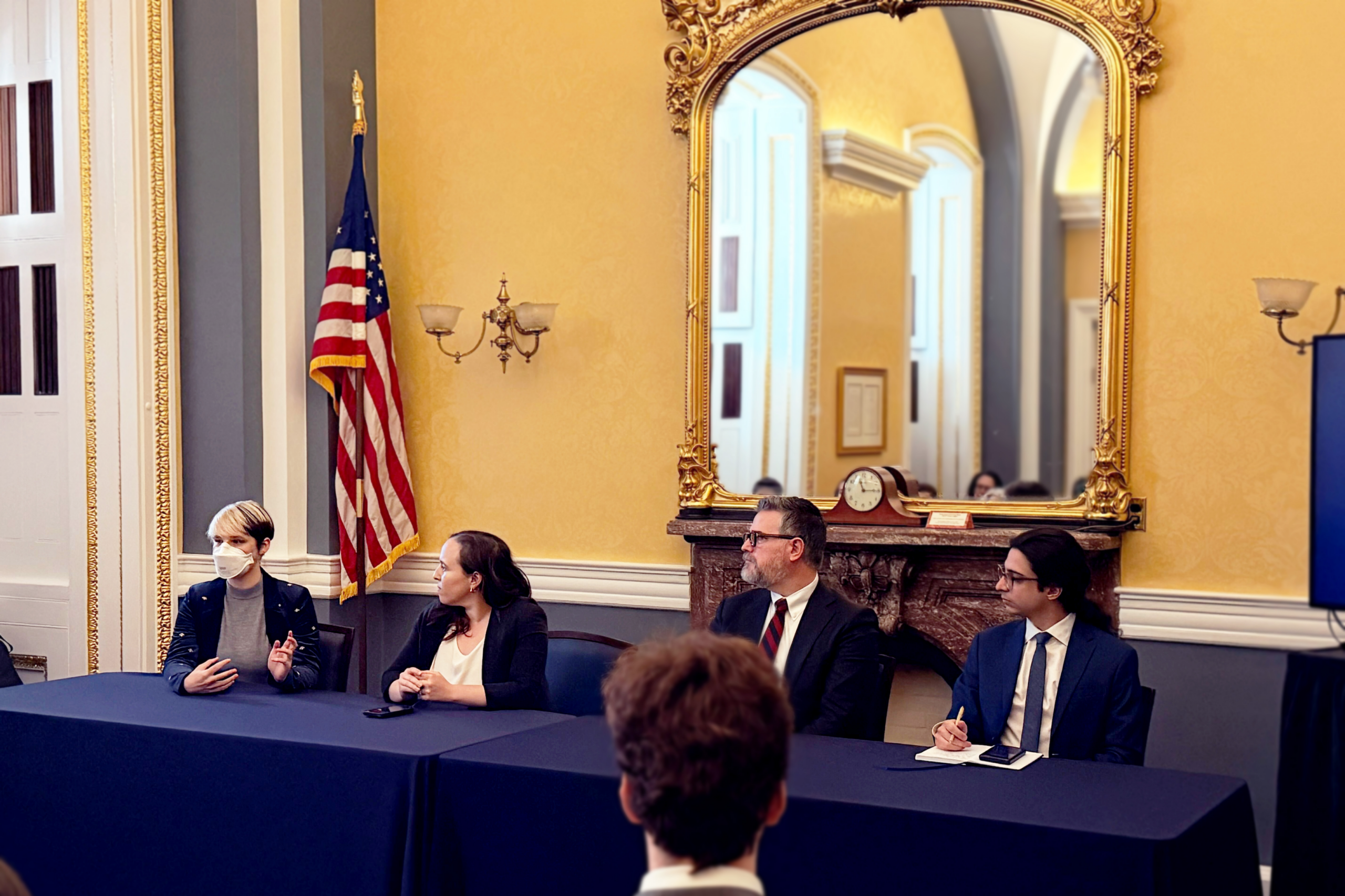
In this Aspen Tech Policy Hub webinar, our Fellows showcased their projects focused on Needles in Haystacks: Using Tech for Good. Following the presentations of the projects, Rediet Abebe, co-founder of Mechanism Design for Social Good (MD4SG), gave further remarks.
Presented Projects
Combating Domestic Terrorism: An FBI study on active shooters shows that there were on average three distinct witnesses who observed concerning behaviors about the suspect prior to their attack. Unfortunately, nearly 60 percent of witnesses did not report what they knew, resulting in many missed opportunities to save lives. Anjana Rajan demo’d one way to solve this low reporting rate: through the use of a digital escrow.
Fair Algorithmic Housing Loans: Mortgage lenders increasingly use machine learning algorithms to make loan approval and pricing decisions. While there are some benefits to this automation, how can we ensure fairness among historically marginalized and underbanked populations? Samara Trilling recommends that state lending regulators define a fairness metric for mortgage algorithms and pilot automated fair lending tests.
Speakers
Rediet Abebe
co-founder of Mechanism Design for Social Good
Rediet Abebe is co-founder of Mechanism Design for Social Good (MD4SG), an interdisciplinary research center focused on improving access to historically underserved and disadvantaged communities. In addition to co-founding MD4SG, she co-founded Black in AI, a global initiative focused on increasing the presence of Black individuals in the field of AI. Abebe’s research focuses on AI and algorithmic impacts on equity and justice, specifically building and analyzing data-driven techniques to mitigate opportunity inequality. Abebe is currently a Junior Fellow at the Harvard Society of Fellows and an incoming Assistant Professor at UC Berkeley EECS.
Samara Trilling
SOFTWARE ENGINEER
Samara Trilling is a software engineer researching machine learning fairness policy. At Sidewalk Labs, Samara builds next-generation city master planning software. Previously, Samara worked on tools to close the digital divide at Google Fiber and to democratize news reporting at Google News. Samara has a degree in computer science from Columbia University with a specialization in artificial intelligence and a concentration in history. Samara loves hiking, collects books on the history of computing, and plans to build a tiny house and tow it around with her electric truck.
Anjana Rajan
technology entrepreneur
Anjana Rajan is a technology entrepreneur with expertise in applying cryptography to social justice issues. Previously, she was the CTO of Callisto, a nonprofit that builds technology to combat sexual assault. Before that, she worked at Palantir Technologies, where she built and deployed products in the Middle East. She was a Knight Scholar at Cornell University’s Engineering School and received her bachelor’s and master’s degrees in Operations Research and Information Engineering. Anjana is also a former elite triathlete who raced for Team USA.
This conversation is part of the Aspen Tech Policy Hub’s Demo Day Video Series. Please visit our website to learn more about our series and RSVP for other events.
{"includes":[{"object":"taxonomy","value":"131"}],"excludes":[{"object":"page","value":"141827"},{"object":"type","value":"callout"},{"object":"type","value":"form"},{"object":"type","value":"page"},{"object":"type","value":"article"},{"object":"type","value":"company"},{"object":"type","value":"person"},{"object":"type","value":"press"},{"object":"type","value":"report"},{"object":"type","value":"workstream"}],"order":[],"meta":"","rules":[],"property":"","details":["title"],"title":"Browse More Events","description":"","columns":2,"total":4,"filters":[],"filtering":[],"abilities":[],"action":"swipe","buttons":[],"pagination":[],"search":"","className":"random","sorts":[]}



 Facebook
 Twitter
 LinkedIn
 Email